Cat Body Language Cheat Sheet: Signals and Meows
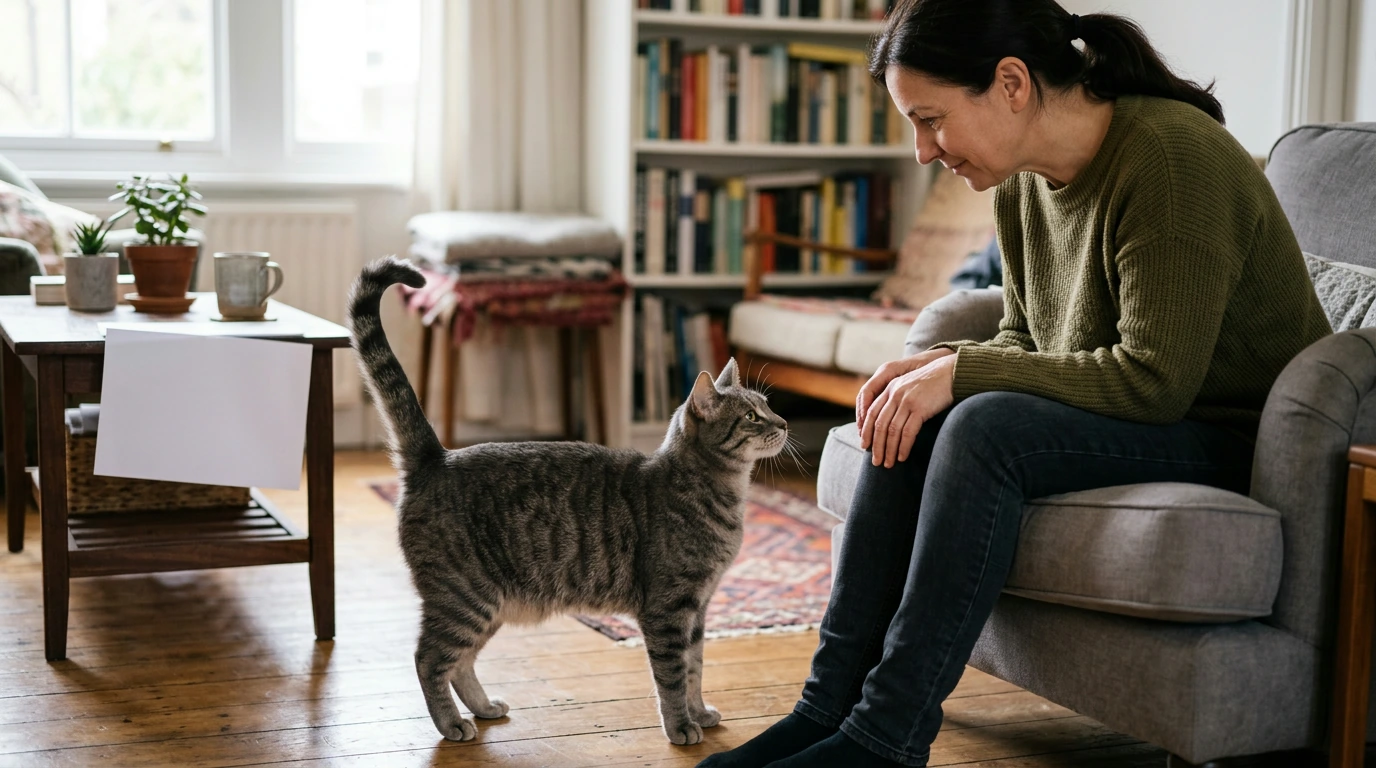
Your cat may greet you with an upright tail, settle nearby with soft eyes, or suddenly walk away during petting. These small changes in posture, movement, and sound can offer clues about what your cat needs. Our printable Cat Body Language & Behavior Cheat Sheet gives you a handy reference for noticing those signals and responding thoughtfully.
A Quick Reference for Everyday Cat Communication
Learning your cat’s communication style takes time. A quick reference can help you pay attention to details you might otherwise miss, from ear position to the way a meow changes around mealtime. You can use it to build a clearer picture of your cat’s familiar routines and preferences.
Our Cat Body Language & Behavior Cheat Sheet is a printable guide to feline signals, postures, and meows. It’s listed at $9.99 and can be kept close at hand when you want a reminder of what to observe.
A cheat sheet isn’t a fixed translation for every movement. Cats have individual habits, and the same signal can mean different things in different situations. Use the guide as a starting point, then let your cat’s overall behavior and the circumstances shape your response.
Read the Whole Cat, Not Just the Tail
A tail can be expressive, but it tells only part of the story. Look at your cat’s ears, eyes, facial expression, body posture, and movement together. Notice what is happening nearby, too: a visitor, an unfamiliar sound, or another animal can change how your cat feels about an interaction.
The following table offers starting points rather than definitive answers. Your cat’s usual behavior and the situation matter as much as any single sign.
| Signal | Possible meaning | Helpful response |
|---|---|---|
| Relaxed posture and soft eyes | The cat may feel comfortable | Let the cat choose whether to approach |
| Ears flattened and body crouched | The cat may feel fearful or threatened | Reduce pressure and provide space |
| Tail held upright | The cat may be feeling friendly or confident | Observe the rest of the body before interacting |
| Tail flicking or lashing | The cat may be stimulated or irritated | Pause interaction and watch for other signals |
If several signs of discomfort appear together, give your cat room and avoid forcing contact. For example, a crouched body, flattened ears, and an attempt to retreat are good reasons to step back and let your cat move away. During petting, pausing when the tail begins to lash gives you a chance to see whether your cat wants the interaction to continue.
For more context on feline posture and expressions, explore ASPCA’s guide to cat body language and International Cat Care’s guide to understanding your cat.
What Meows and Other Sounds Can Tell You
A meow can be an invitation for attention, a reminder about food, or a response to something else your cat wants or needs. Pay attention to when it happens and what follows. A cat who meows beside an empty water bowl may be communicating something different from one who calls when you enter the room.
Purring deserves a closer look as well. It can accompany a relaxed moment, but it is not always a sign of contentment. Consider your cat’s posture, activity, and other behavior before deciding what the sound means. If your cat is purring while hiding or acting unusually, don’t assume everything is fine based on the sound alone.
Ask your veterinarian about a sudden or persistent change in vocalization, especially if you also notice changes in appetite, activity, litter box habits, or behavior. A professional can help you decide whether a medical issue needs attention.
Put the Printable Guide to Work
Keep the printed reference somewhere convenient, such as near your cat’s feeding area or where you usually spend quiet time together. Look at it during familiar routines rather than waiting for a confusing moment. Over time, you may notice that your cat has a distinctive way of asking for play, greeting you, or signaling that a break is needed.
Try making a brief note of what happened before a behavior and what your cat did afterward. Did a sound occur just before your cat crouched? Did your cat return after you stepped back, or choose to stay away? These observations can help you make practical decisions without relying on a single cue.
If household noise is part of the situation you’re observing, our Helping Pets Handle Vacuum Stress resource is another option to explore. You can also reduce pressure in the moment by letting your cat move away from the noise and settle without being approached.
Our team offers these resources for education. They don’t replace advice from your veterinarian or a qualified behavior professional, particularly when a behavior is new, persistent, or causing concern.
FAQ
Can a cat’s tail tell me exactly how it feels?
No. Tail position and movement are clues, but your cat’s ears, posture, facial expression, and surroundings also matter.
Why does my cat meow at me?
Your cat may be seeking attention or communicating another need, so notice when the meowing occurs and what is happening around it. Consult your veterinarian about an unexplained, sudden, or persistent change in vocalization.
Is this cat communication guide printable?
Yes. The Cat Body Language & Behavior Cheat Sheet is described as a printable guide.












Leave a comment