Easy DIY Cat Enrichment Ideas for Everyday Play
What are some easy DIY ideas for cat enrichment?
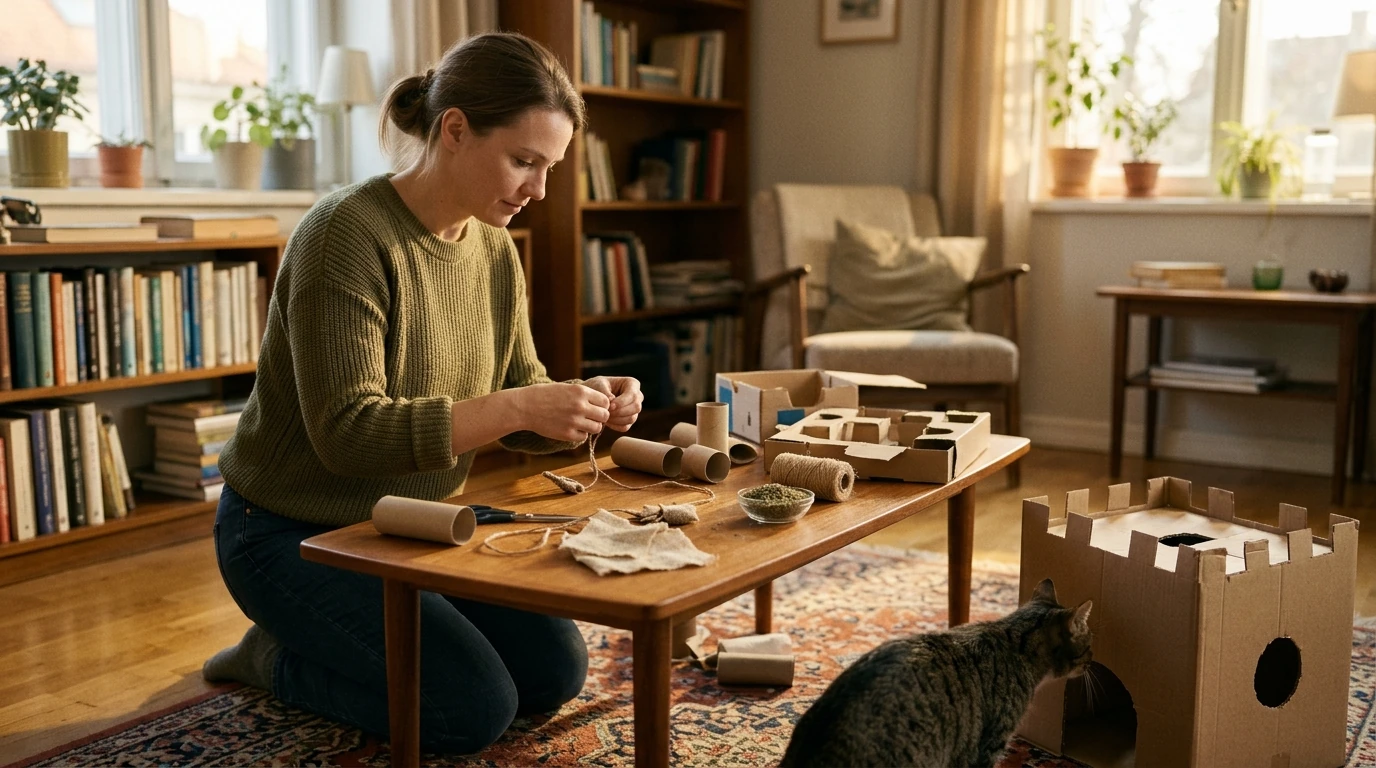
You can make everyday life more interesting for your cat with a few household materials and short, interactive play sessions. Our team likes enrichment projects that invite cats to explore, chase, scratch, and work for food without requiring complicated supplies.
Make a cardboard box hideout
Place an open cardboard box on its side and let your cat investigate. You can cut a second opening to create an escape route or connect two boxes for a simple tunnel. Remove staples, tape, and loose pieces, and make sure the openings are large enough for your cat to pass through comfortably.
Turn a paper bag into a play space
Set a plain paper bag on the floor and sprinkle a few treats inside. Remove the handles first so your cat cannot get caught in them. Skip plastic bags, which can pose a suffocation hazard, and supervise play with any bag.
Create a food puzzle
Place a small portion of your cat’s dry food in an empty egg carton or a muffin pan. Your cat can use their paws to retrieve the pieces. Start with food in just a few open compartments, then add a little more challenge by loosely covering some spaces with cat-safe balls too large to swallow.
Set up a supervised chase game
Drag a store-bought wand toy along the floor, pause it behind furniture, and let your cat stalk and catch it. Keep sessions short and allow successful catches to maintain interest. Put wand toys, string, and ribbons away after play; they can cause serious injury if swallowed.
Offer a scratching station
Arrange a sturdy cardboard scratcher near a favorite resting or play area. Some cats prefer a horizontal surface, while others enjoy a stable upright post. A small sprinkle of catnip can encourage exploration if your cat responds to it.
Rotate the fun
You do not need to put every activity out at once. Swap boxes, puzzles, and toys periodically to give your cat something different to investigate. Discard damaged items, and choose toys without small parts that could come loose.
For more ways to build a stimulating indoor routine, visit our indoor cat enrichment and DIY play guide.
FAQ
How often should I play with my cat?
Offer play every day, starting with a few short sessions and adjusting to your cat’s interest and energy level. Let your cat stop when they lose interest or show signs of overstimulation.










Leave a comment